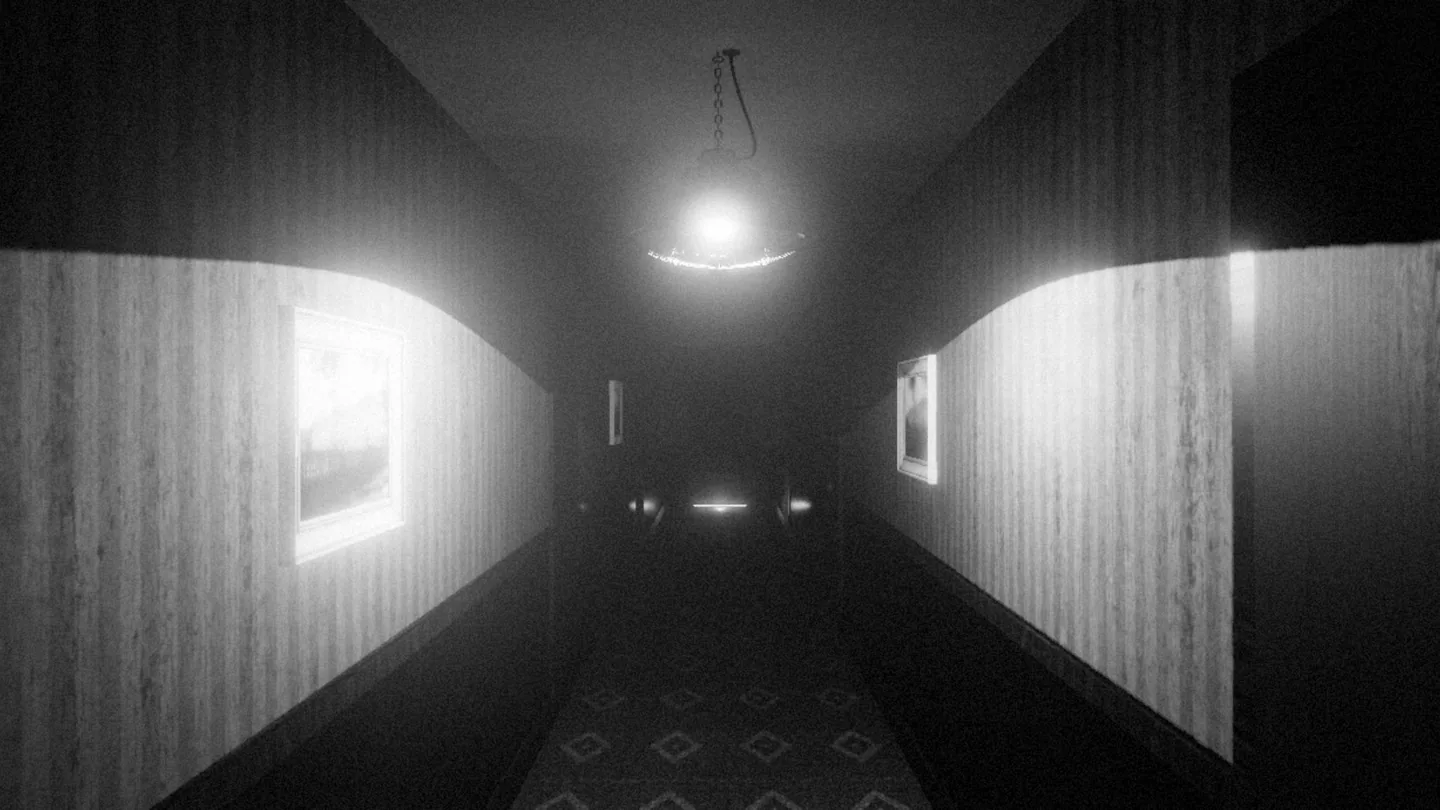
There is one lamp in the corridor, and it buzzes. The buzz and the brightness are the same signal, worked out tens of thousands of times a second, so when the lamp stutters you hear it at the moment you see it. Everything else in The Hum was built on that.
01The idea
I started with one message:
Help me plan out a David Lynch tribute project which puts together the mood and atmosphere his films create but as a next level web technology project. I want to push the boundaries
Claude came back with a plan and one rule I kept to the end: grammar, not quotation. No Red Room, no zigzag floor, no characters, no stills, no music from the films. What it would borrow is how the films work:
- Sound leads. Most of the dread is in the ears.
- Light and sound are one signal. Electricity misbehaves, and you hear it.
- It changes only when you aren't looking.
- Slow. No jump scares, no monsters, no text telling you what to feel.
It proposed five scenes and asked three questions. Did I have rooms to scan? Should the piece use your camera and microphone? All five scenes, or two first? My answer:
I don't have rooms to take scans of
Webcam and mic intrusions included
The latter
So the rooms would be built in code, the camera would be in, and we would start with the corridor and a room with a television.
02Check first
Same rule as the last few projects: prove the thing it all rests on before building around it. Here that was one question. With headphones on and the lights off, is one lamp and one hum unsettling? If not, the plan said stop.
Claude built the lamp, the hum and a bare corridor, and three looks to choose from.
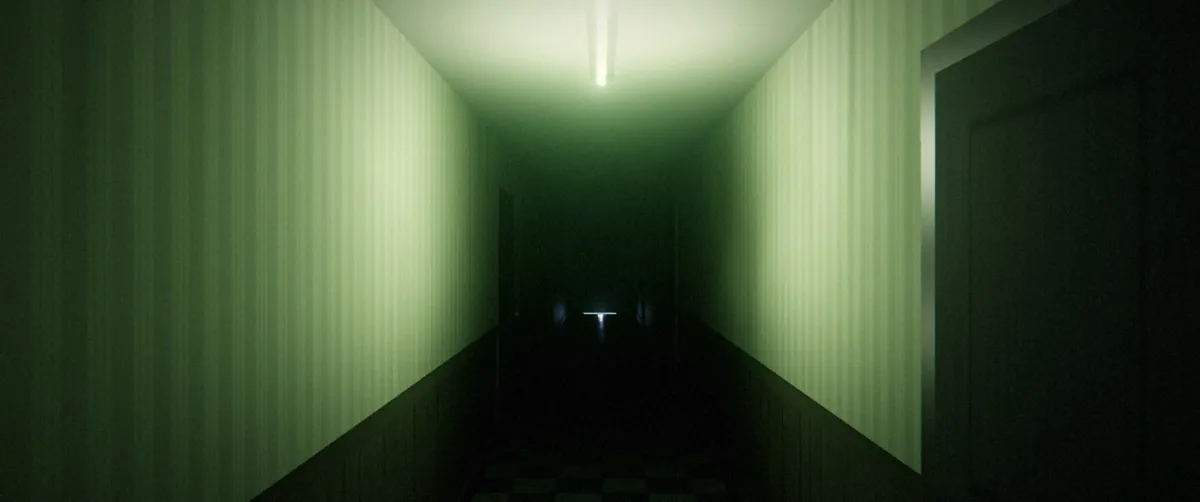 A · Tube
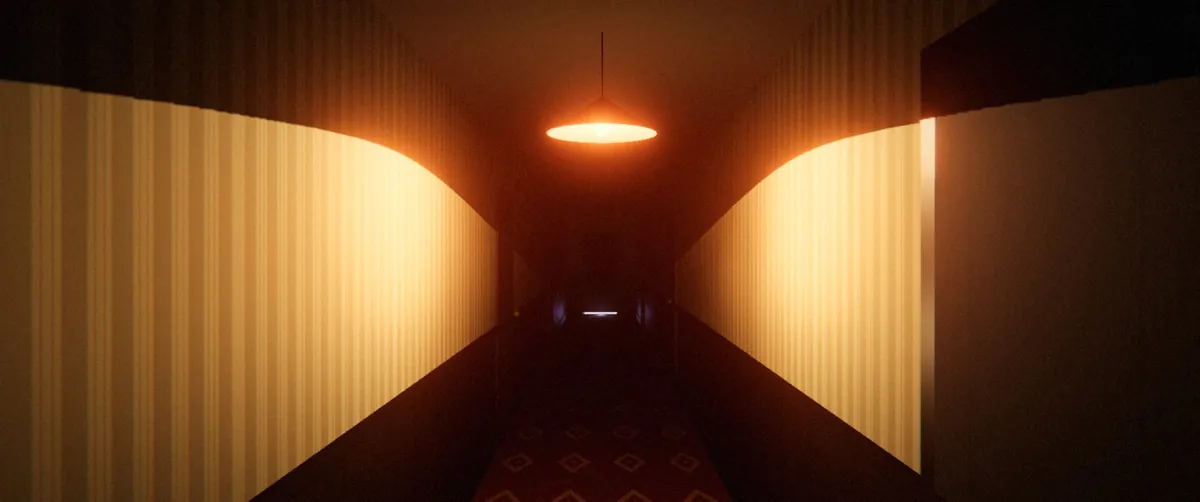 B · Tungsten
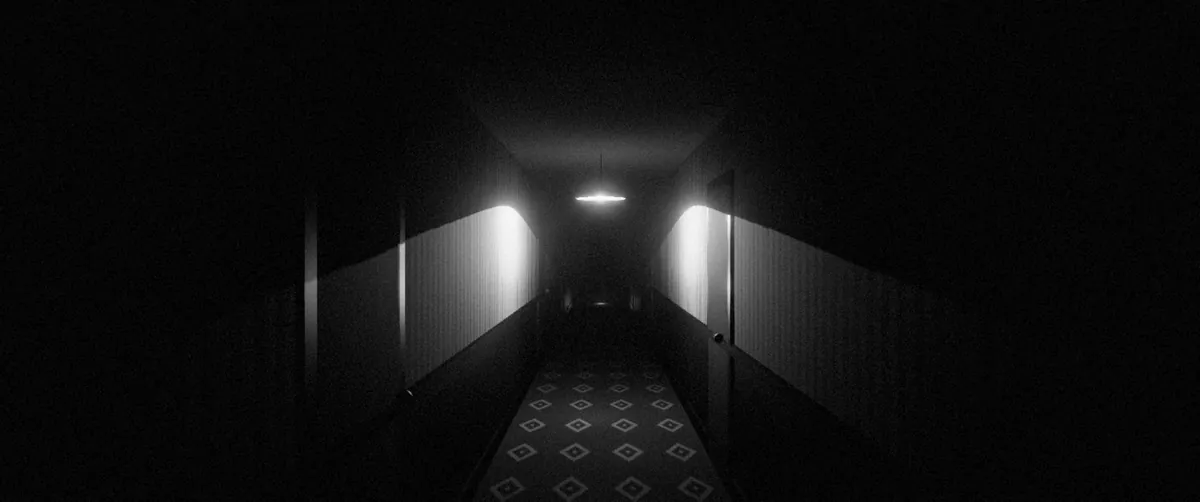 C · Silver
It also told me what it could not check. It runs on a machine with no speakers, so it had measured the sound and never heard it. That part was mine. My reply was three words:
go
C
push
03One signal
The lamp's power is a number between nought and one, made inside the audio engine. It does two jobs. It sets how loud the buzz is, and it is sent to the page to set how bright the lamp is. The page holds the light back by the few milliseconds the sound takes to reach your ears, so they land together.
The lamp stutters, and sometimes goes out for a few seconds. When it does, the only light left is a thin line under the far door.

All the sound is made in the browser: a 50 Hz mains hum (British mains), the lamp's buzz placed in the room so it passes overhead as you walk, a low drone, air, footsteps. There are no audio files.
Flicker can hurt people, so there are limits. The lamp never dips more than about twice a second, the front door warns you, and a tick box makes every dip shallow and slow.
04It changes when you're not looking
You walk by clicking. Each click takes you to the next mark, slowly. You can't roam, because these are composed frames and not a shooter.
Things move only behind you. Walk to the far door and it is shut. Walk back and the corridor is longer than it was. Turn round and the far door has followed you.
The first version of this was too clever. To get the door to open you had to walk the whole corridor, turn, walk it back, turn again and walk in a second time, with nothing to tell you so. I walked it and sent this:
how do i open the door
That one was a design fault, and Claude said so. The fix: two marks after you find the door shut, you hear its latch behind you. The next click turns you round. The door is right there, the lamp goes out, and one more click opens it. Nine clicks from the front door to the room, and every step works on a phone.
The rule goes for the browser as well. Look at another tab for four seconds, and when you come back a door has moved.
05The room with the television
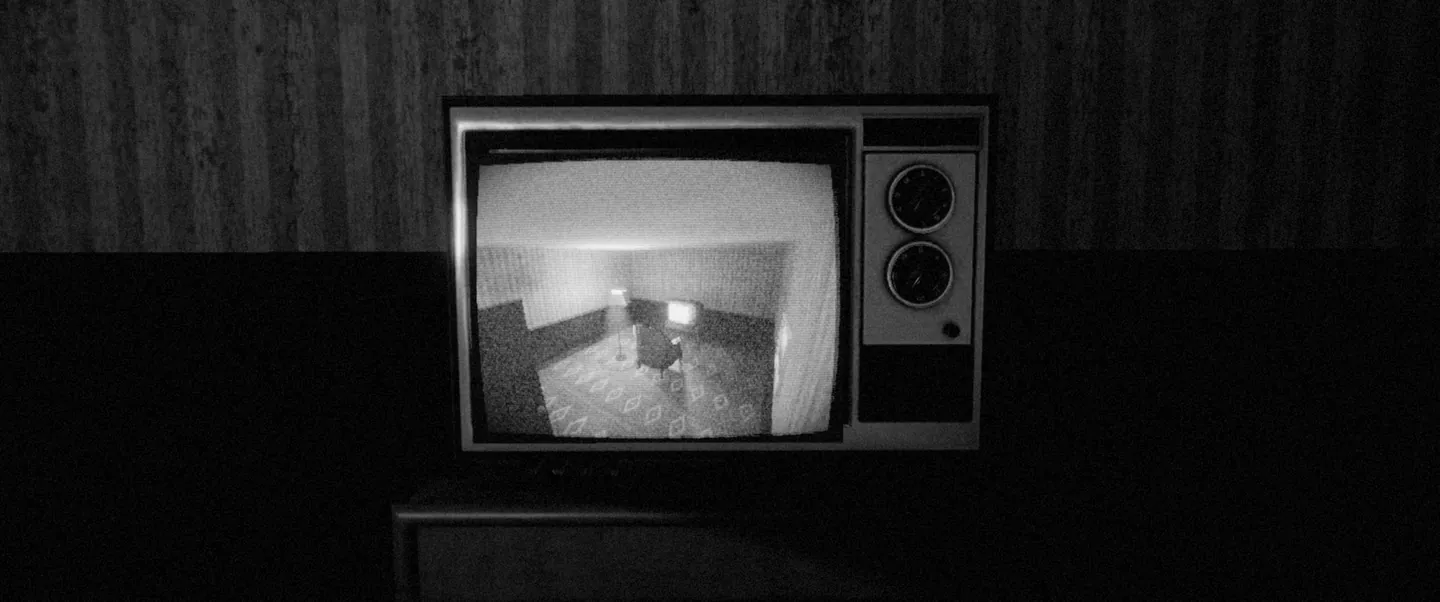
The television is the room's own picture, drawn twelve times a second from up by the ceiling. You are not in it.
If you tick "Let the room see and hear you" at the front door, two more things happen. The screen cuts to your face, about three seconds late, and now and then it holds still when you don't. And the last thing you said out loud comes back once, backwards, from behind the door.
The camera and microphone are off unless you ask for them. The pictures and the sound stay in memory in your browser tab. Nothing is recorded, saved or sent anywhere, and the piece works the same without them, minus the double and the voice.
While you watch, the door shuts behind you. You hear that much. On the television it is still open.
06Build it all
With two rooms working I asked about the other three scenes. Claude ranked them, said the diner was the one to leave until last, and asked which to build.
build it all
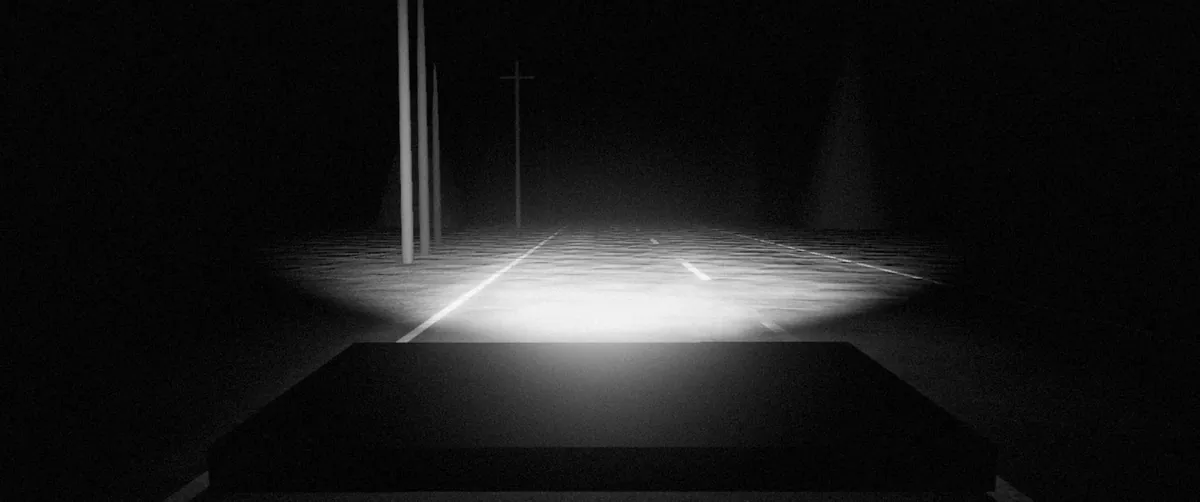 The Road
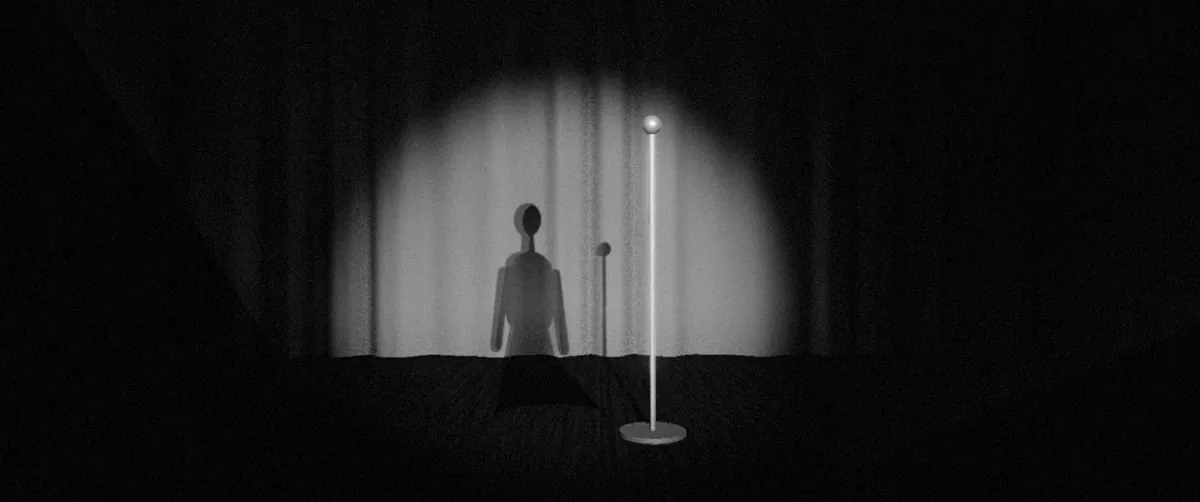 The Stage
- The Road is how you arrive: about 26 seconds of slow night driving past telegraph poles. The headlights are on the lamp signal, so they stutter too.
- The Stage is behind a lit side door that stands ajar between midnight and four in the morning, or on a return visit once you have sat in the armchair. A spotlight, a microphone, a song with no words, and the shadow of a singer that nobody is casting. Then all the sound stops, and the shadow carries on.
- The Diner is where you come out when you leave the television room. It is daytime. The sun is on the lamp circuit. The clock runs backwards. Walk to the far end, and behind you every chair turns to face you.
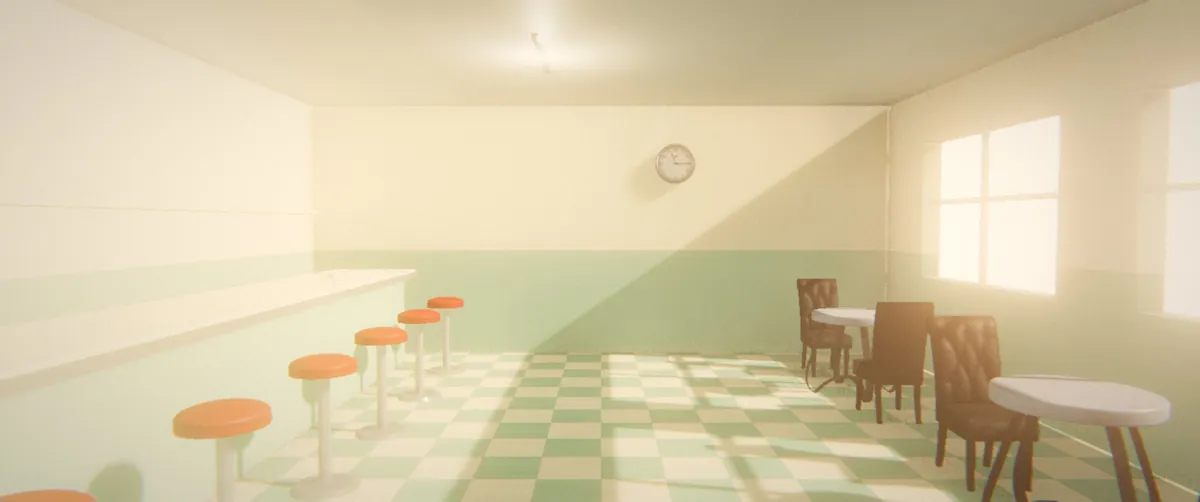 Walking in
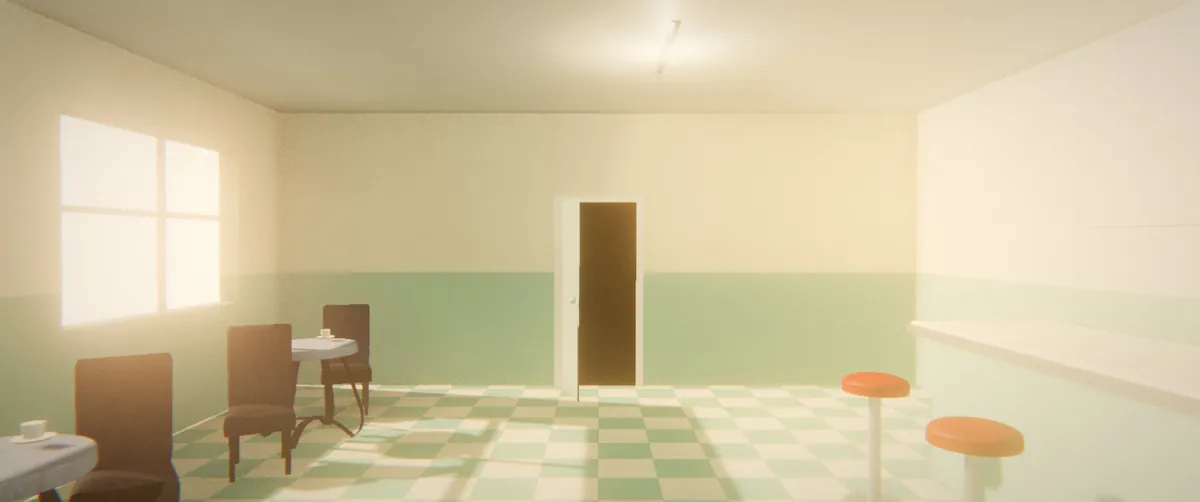 Turning round
07Texture and light
At this point everything was a flat colour and every object was a box. It held up in the dark and nowhere else. I asked:
how do we add much more realism to every scene?
Claude listed five things in order of what they would buy, and warned that more realism is not the same as more Lynch. Half-real furniture reads as a video game. So I narrowed it:
It can still be dark and moody but less hard edges and more realism because of texture and light
That took three passes.
- Surfaces. Photographed wallpaper, carpet, wood, plaster, velvet and tarmac, each with its own roughness and relief.
- Light. Soft shadows, dark corners, and a cone of lit dust under every lamp. Then baked bounce light: how much light comes off the walls and floor, measured ahead of time at a grid of points in each room.
- Furniture. A real armchair, a real television, a lamp on a chain, diner chairs and tables, a clock with hands.
The baking is the part I'd point a developer at. The usual way is a separate 3D program. Claude had the browser measure it instead: at each point it looks along six directions and adds up the light arriving, once for each lamp. Because each lamp is kept apart, its bounce still follows the lamp signal. The bounce flickers with the lamp.
The last pass ran overnight:
Yes go ahead
I am going to sleep to please finish it for me
In the morning there was furniture, the rooms had been baked again around it, and there was a list of the decisions it had made without me. One was painting a real maker's name off the front of the television.
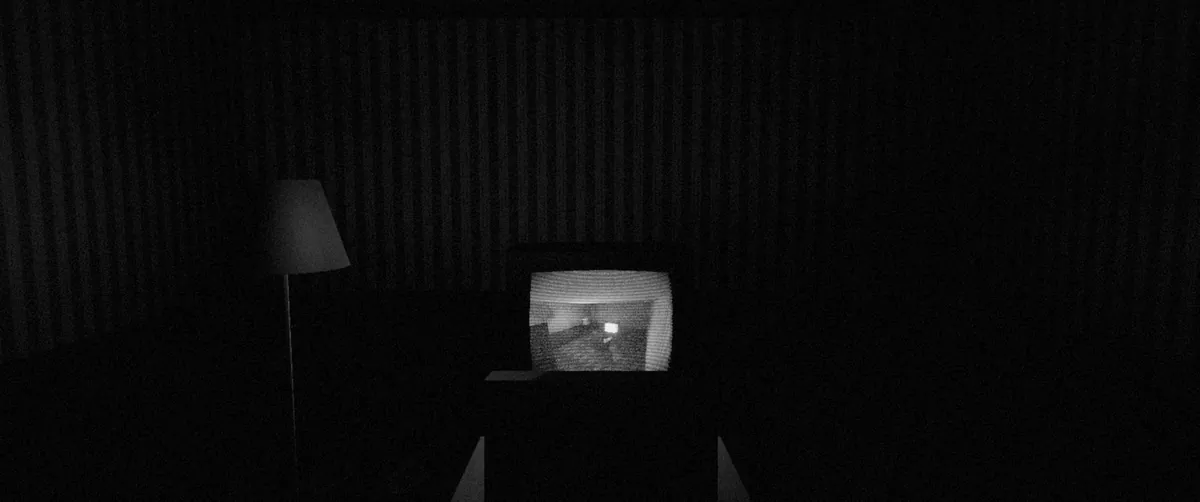 Before
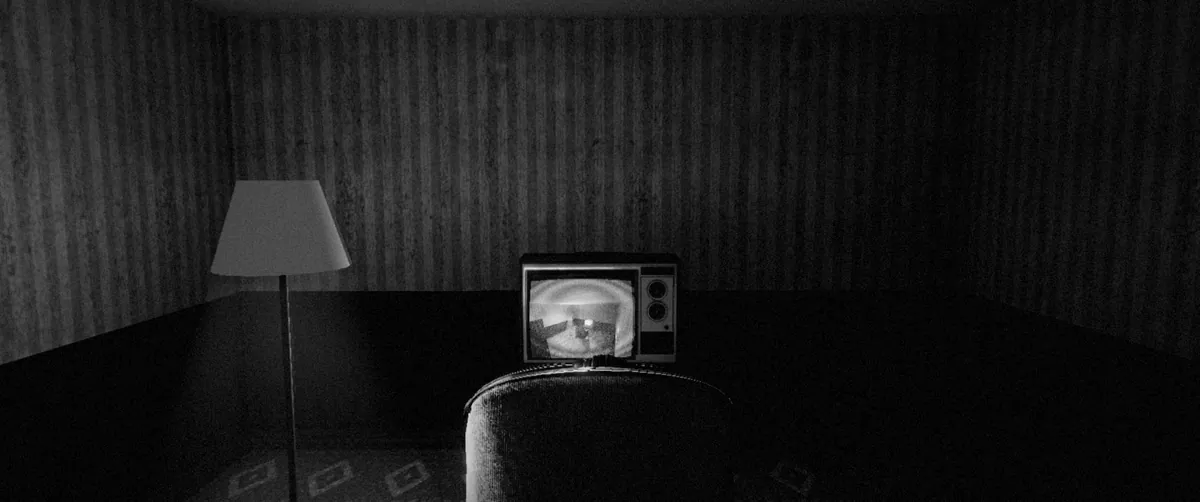 After
08What went wrong
| What happened | What it took |
|---|---|
| I couldn't find how to open the door | A sound behind you, and a click that turns you round. Every step now works by clicking alone |
| On a phone held sideways, the "Come in" button was pushed off the screen | Claude's own walkthrough test couldn't click it. The front door now scrolls |
| The television showed the room upside down | One flipped number, found by looking at the picture |
| The real bounce light was too dim to see | The rooms are dark and dark things don't bounce much. Claude let the lampshade pass light, as cloth does, and turned the bounce up. It told me it had |
| The baked diner came out white | The windows had been counted as far too bright. Fixed and baked again |
| The new lamp's chain threw thick black shadows down the whole corridor | The chain casts none. An unseen cone the shape of the shade does that job |
| A bright speck appeared on the wallpaper | Wallpaper is not shiny. Now it isn't |
| Claude has never heard it | It measured the sound and said, every time, that it was unheard. The listening was mine |
One more thing it could not do. The machine it builds on has no real graphics card, so it only ever saw the older of the two ways the piece can draw itself. It said so in every report, which is the right thing to do with a gap you can't close.
09How I prompted
Every message I sent, in order. The first is the longest.
Help me plan out a David Lynch tribute project which puts together the mood and atmosphere his films create but as a next level web technology project. I want to push the boundaries
I don't have rooms to take scans of
Webcam and mic intrusions included
The latter
The new repo the-hum is created
Proceed with the title
go
C
push
merge to main
2. fiine
3. 1 not yet
1/ yes
2. done
how do i open the door
what's the URL?
what was left to pick up?
what about the other scenes?
build it all
summarise the project?
go ahead
push to main
how do we add much more realism to every scene?
It can still be dark and moody but less hard edges and more realism because of texture and light
merge
bake the lighting
Yes go ahead
I am going to sleep to please finish it for me
Let's fix 3
Merged
Fix up what it has left out
That is all 23. The fifth also carried a web address, and once I picked an answer from a list. The last one is this page. What I'd take from it:
- Set one rule early and keep it. Grammar, not quotation. It settled most later arguments before they started.
- Make it prove the hard part first. One lamp and one hum, before any rooms.
- Walk it yourself. The tests all passed and I still couldn't open the door. A test can tell you a thing works. It can't tell you whether anyone will find it.
- Ask what it couldn't check. The useful part of each report was the list of what Claude hadn't heard or seen.
- Say what you want kept. "More realism" would have made it brighter. "Dark and moody, less hard edges" got the right thing.
Put your headphones on and turn the lights off.
Built with Claude Code and three.js. Textures and furniture models from Poly Haven, all CC0. Every sound is made in the browser. A tribute to the mood of David Lynch's films: nothing from the films is used, no characters, sets, stills or music. Not affiliated with David Lynch or his estate.